Still consumed with meeting my 1500 words-per-day quota for my Novel in Six Months Class with Lori Wilde at SavvyAuthors, I thought I would share more of my overwhelming frustrations as I continue to learn how to do this!
I wrote over 8,000 words last week, all in a state of pure terror. Every morning, I wonder where six more pages of writing is going to come from. Where does it come from? Did you ever wonder?
My muse is ornery, difficult, and uncooperative. Stubborn, too. She makes my life hell! What to do with her? Is there any way to train a muse?
I wish I was the kind of writer who can follow a schedule. For example, I say, I am going to sit here for four hours and at the end, I'm going to be done. But no! At the end of the time, yes, I do have something, but it sucks, and requires more hours of hairpulling and cursing and pacing all about the house to turn it into something resembling coherence. This is very bad for anyone who has any other responsibilities other than writing. It makes for a cranky, befrazzled person who feels like she can never get her work done.
I think there is a type of writer who is so gifted so as to be a natural plotter--who can envision the most unique twists and turns, who can create sensational high concept ideas. A person like this has a highly creative mind and the vision to carry their ideas out. There is also a writer who makes outlines and sticks to them. Why couldn't I have a muse who works like that?
I am not a natural plotter. I am the wost panster-plotter ever! I sit for hours trying to envision, write down, map, plot out, storyboard what on earth is going to happen next to my poor, tortured characters. Even if I get some semblance of a shoddy outline down, alas, my muse changes drections on me, and it's back to the drawing board again.
I have no problem with sitting here for hours. I've got that part down! But now I have to learn the habits of somone who simply cannot afford to take time for tangents and detours and endless redoings. I've got to learn to move.
Having a background in science, I reflect often on the differences between a life that depends on creative ideas and one that works with "facts." There are more similarities than one would at first imagine, and I'm not really saying the two are mutually exclusive, (and science does require creativity and who said science is made of "facts" anyway?) but all that makes for a different blog post. The biggest difference I can see is that in a writer's life, your brain has to generate the raw material that makes for the rest of your day. It's your imagination that creates what you work on all day.
Sometimes, I wonder if stories are just born to be told in a certain way. Have you ever had this experience--you are rewriting or re-envisioning a scene. Maybe you forgot that you've done it before. Have you ever compared the new scene with the old one? I find that at times the word choices are almost identical. this always scares me in a creepy way. Again I wonder, where exactly do these ideas come from?
I'm hoping this all becomes easier. That if I just keep at it, I will learn. The great joys of writing are always balanced by difficulties, just like everything else on this planet.
In the meantime, anybody want to trade muses?

Monday, May 9, 2011


Monday, May 2, 2011
Learning to Write Fast
I am lucky to be in a course on SavvyAuthors run by Lori Wilde. It is a Fast Track Novel Writing Class that goes for six months. It's wonderful, and Lori is a great teacher. That being said, the agony is that every day, five days a week, each of us has to turn in 1500 words of writing. If you do the math, that's about six (ds) pages per day, 7500 words a week. If you are short or miss a day, you've got to make it up by week's end. We signed a pact. Produce or else!
This is terrifying to me. In order to do this, you've got to be able to do several things. The first is, you have to have a plot for your book! You've got to know where you are headed to be able to crank out 6 pages a day! No fa-la-la-ing around, no I-think-I'll-start-in-a-different-place today, or I-think-I'll-take-a-day-for-research. Biggest fear: what if my brain is too little to wrap itself around such a big plot? My plot seems bigger than my brain right now!
I read on Lauren Willig's website that she generally stays about 5 chapters ahead on her outline, and has a general outline to guide her, even though things may change as the characters behave outside the lines. Five chapters ahead! Egads, I'm a paragraph ahead!
You need to leave the perfectionism behind. This is by far the most difficult thing for me. The first few days last week, I had difficulty even turning the pages in, even though only my class can see them and surely no one cares. But they're awful! Did I actually let the hero say that? It's ridiculous! How to turn off that nasty internal editor long enough to turn my homework in? (Must close eyes and hit send button before one can criticize onself.)
Lastly, you need the research to be done. My book takes place in 1832 London, really after the Regency period. I've never written beyond the Regency, and I've never done a romance with a lot of historical intrigue. But how do I research when I can't even get my homework turned in?
I'm happy to say I did make my word count last week, despite being on the road for 3 days and having kids home all week. I really hope I can do this, because what Lori is teaching us is how to write like a real author. It's not enough to BICHOK all day--I've got that part down. This is where you roll up your sleeves, research, create, produce, and crank.
I know that completing this course will take my writing to a new level...if I survive it!
This is terrifying to me. In order to do this, you've got to be able to do several things. The first is, you have to have a plot for your book! You've got to know where you are headed to be able to crank out 6 pages a day! No fa-la-la-ing around, no I-think-I'll-start-in-a-different-place today, or I-think-I'll-take-a-day-for-research. Biggest fear: what if my brain is too little to wrap itself around such a big plot? My plot seems bigger than my brain right now!
I read on Lauren Willig's website that she generally stays about 5 chapters ahead on her outline, and has a general outline to guide her, even though things may change as the characters behave outside the lines. Five chapters ahead! Egads, I'm a paragraph ahead!
You need to leave the perfectionism behind. This is by far the most difficult thing for me. The first few days last week, I had difficulty even turning the pages in, even though only my class can see them and surely no one cares. But they're awful! Did I actually let the hero say that? It's ridiculous! How to turn off that nasty internal editor long enough to turn my homework in? (Must close eyes and hit send button before one can criticize onself.)
Lastly, you need the research to be done. My book takes place in 1832 London, really after the Regency period. I've never written beyond the Regency, and I've never done a romance with a lot of historical intrigue. But how do I research when I can't even get my homework turned in?
I'm happy to say I did make my word count last week, despite being on the road for 3 days and having kids home all week. I really hope I can do this, because what Lori is teaching us is how to write like a real author. It's not enough to BICHOK all day--I've got that part down. This is where you roll up your sleeves, research, create, produce, and crank.
I know that completing this course will take my writing to a new level...if I survive it!
Thursday, April 21, 2011
My First Blog Interview Today at Wendy La Capra's Blog
Up-and-coming historical romance writer and friend Wendy La Capra interviewed me on her blog today--please stop by! Wendy La Capra's Romance Writing Blog http://www.wendylacapra.com/
Wednesday, April 20, 2011
The Life of Painters...and Other Hazards
Don't you love learning things you never intended to find?
I'm doing some research into medicine as it was practiced in the Regency period, and I had to chuckle when I came across this, which was written way earlier, around 1700:
"We read that Raphael of Urbino, the famous painter, was snatched from life in the very flower of his youth; Baldassarre Castiglione lamented his untimely death in an elegant poem. Their sedentary life and melancholic temperment may be partly to blame, for they are almost entirely cut off from intercourse wtih other men and constantly absorbed in the creations of their imagination."
No, he is not talking about writers!
Bernardino Ramazzini, an Italian physician (1633-1714) is discussing the diseases of painters in his famous treatise Diseases of Workers, in which he astutely categorized the hazards workers are exposed to in 52 professions.
"Painters...are attacked by various ailments such as palsy of the limbs, cachexy, blackened teeth, unhealthy complexions, melancholia, and loss of the sense of smell."
Ramazzini documented the hazards of mercury, lead, copper, and silver in paint pigments, as well as varnish and linseed oil. "Moreover, painters when at work wear dirty clothes smeared with paint, so that their mouths and noses inevitably breathe tainted air; this penetrates to the seat of the animal spirits, enters by the breathing passages the abode of the blood, disturbs the econnomy of the natural functions, and excites the disorders mentioned above."
In the 1500's, a French physician named Fernel discribed violent stomach pains suffered by a painter that required 3 or 4 men to press their entire body weight on his abdomen to help them abate. This particular painter unfortunately had the habit of squeezing the color from his brush with his fingers and then sucking it off.
These observations make me realize that people used their intelligence brilliantly during all ages; it is just that technology limits how close we can get to the truth. The truth is different for different ages.
Okay, back to creating! (And no sucking on your pens!)
I'm doing some research into medicine as it was practiced in the Regency period, and I had to chuckle when I came across this, which was written way earlier, around 1700:
"We read that Raphael of Urbino, the famous painter, was snatched from life in the very flower of his youth; Baldassarre Castiglione lamented his untimely death in an elegant poem. Their sedentary life and melancholic temperment may be partly to blame, for they are almost entirely cut off from intercourse wtih other men and constantly absorbed in the creations of their imagination."
No, he is not talking about writers!
Bernardino Ramazzini, an Italian physician (1633-1714) is discussing the diseases of painters in his famous treatise Diseases of Workers, in which he astutely categorized the hazards workers are exposed to in 52 professions.
"Painters...are attacked by various ailments such as palsy of the limbs, cachexy, blackened teeth, unhealthy complexions, melancholia, and loss of the sense of smell."
Ramazzini documented the hazards of mercury, lead, copper, and silver in paint pigments, as well as varnish and linseed oil. "Moreover, painters when at work wear dirty clothes smeared with paint, so that their mouths and noses inevitably breathe tainted air; this penetrates to the seat of the animal spirits, enters by the breathing passages the abode of the blood, disturbs the econnomy of the natural functions, and excites the disorders mentioned above."
In the 1500's, a French physician named Fernel discribed violent stomach pains suffered by a painter that required 3 or 4 men to press their entire body weight on his abdomen to help them abate. This particular painter unfortunately had the habit of squeezing the color from his brush with his fingers and then sucking it off.
These observations make me realize that people used their intelligence brilliantly during all ages; it is just that technology limits how close we can get to the truth. The truth is different for different ages.
Okay, back to creating! (And no sucking on your pens!)

Friday, April 15, 2011
News
I recently learned that my manuscript My Wicked Duke is a finalist in the historical category of the Cleveland Rocks Romance Contest, and a query letter I submitted is a finalist in the New Hampshire RWA Query Quandary Contest.
Yay for celebrating small successes!
Yay for celebrating small successes!
Elizabeth Inchbald: A Real-Life Regency Heroine
I am reading a book, Passion and Principle: the Loves and Lives of Regency Women by Jane Aiken Hodge.
Here is an amazing story I rustled up from this book:
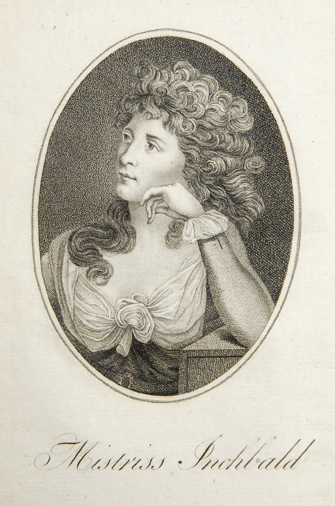
Have you ever heard of Elizabeth Inchbald (1753-1821)? She is a woman with an incredibly independent spirit for her age (well, for any age!) who was a novelist, playwright, and actress.
Elizabeth was a farmer's daughter who was never formally educated but read a lot. Her passion was the theater, and she ran away at 17 to London to become an actress, leaving a note of apology for her mother. A few days later, she sought refuge with her married sisters, and her mother forgave her for fleeing. An actor, Joseph Inchbald, who had two illegitimate daughters, pursued her and offered marriage. They were in an acting company together, and performed Shakespeare as well as plays by popular playwrights.
Her marriage was not perfect. In her diaries she recorded that her husband was often jealous and made scenes after his drinking. In her travels, she met the actor and stage manager John Phillip Kemble, worked in one of his plays, and clearly made her husband jealous by her friendship with him. He was her lifelong friend and also apparently her unrequited love, but she denied that they were ever lovers.
Here are some images of Elizabeth, before I continue on with her story:


In all, Elizabeth wrote over 20 plays. The work she is most well known for is a novel called A Simple Life. Reportedly, she patterned the hero after Kemble. He is handsome, romantic, but unheroic--it is not a flattering portrait.
The theme of A Simple Life is that a proper education is essential for women to make the right choices in life.
Elizabeth continued to live independently on her earnings until her death.
Spunky, intelligent, and independent...now that's a real-life Regency heroine for you!
Sources:
Passion and Principle: the Loves and Lives of Regency Women by Jane Aiken Hodge. John Murray Publishers, London, 1996.
Elizabeth Inchbald, article by Elma Scott, Chawton House Library, viewed at: http://www.chawton.org/library/biographies/inchbald.html
Here is an amazing story I rustled up from this book:
Have you ever heard of Elizabeth Inchbald (1753-1821)? She is a woman with an incredibly independent spirit for her age (well, for any age!) who was a novelist, playwright, and actress.
Elizabeth was a farmer's daughter who was never formally educated but read a lot. Her passion was the theater, and she ran away at 17 to London to become an actress, leaving a note of apology for her mother. A few days later, she sought refuge with her married sisters, and her mother forgave her for fleeing. An actor, Joseph Inchbald, who had two illegitimate daughters, pursued her and offered marriage. They were in an acting company together, and performed Shakespeare as well as plays by popular playwrights.
Her marriage was not perfect. In her diaries she recorded that her husband was often jealous and made scenes after his drinking. In her travels, she met the actor and stage manager John Phillip Kemble, worked in one of his plays, and clearly made her husband jealous by her friendship with him. He was her lifelong friend and also apparently her unrequited love, but she denied that they were ever lovers.
Here are some images of Elizabeth, before I continue on with her story:

Suddenly widowed in 1779, Elizabeth decided to continue to act while she pursued writing. She used her stage salary as security. Although she had multiple offers of marriage, she refused them all, preferring her independence. A novel she wrote was rejected, as were several plays, but she had great success at last with the play A Mogul's Tale in 1784. "There is no woman I more truly admire, nor any man whose abilities I more highly esteem," wrote John Kemble, who did not offer marraige as Elizabeth must have hoped. The author William Godwin, husband of Mary Wollstonecraft, was, however, one of the men who did propose marriage, but she declined.
In all, Elizabeth wrote over 20 plays. The work she is most well known for is a novel called A Simple Life. Reportedly, she patterned the hero after Kemble. He is handsome, romantic, but unheroic--it is not a flattering portrait.
The theme of A Simple Life is that a proper education is essential for women to make the right choices in life.
Elizabeth continued to live independently on her earnings until her death.
Spunky, intelligent, and independent...now that's a real-life Regency heroine for you!
Sources:
Passion and Principle: the Loves and Lives of Regency Women by Jane Aiken Hodge. John Murray Publishers, London, 1996.
Elizabeth Inchbald, article by Elma Scott, Chawton House Library, viewed at: http://www.chawton.org/library/biographies/inchbald.html
Monday, April 11, 2011
The Surprise Factor in Fiction
Had a big family event this weekend at my house that required a lot of preparation, so yesterday I gave myself permission to vege out, enjoy the 80+ degee weather (yes, even in Cleveland, it appears spring has arrived (and I say that with a great deal of caution)!), and dig into Brava, Valentine, Adriana Trigiani's continuation of Valentine Roncalli's trials and tribulations.
I mentioned before how much Trigiani's language gets to me--it's sensory and bold. But even moreso, it surprises. I really believe that this is one of the marks of experienced authors--they know how to make you sit up and say wow! how did she ever think of that?
In these two books, I see the surprise factor on two levels--one is in the descriptions of things--the metaphors are so fresh and startling. (No cliches here, no siree!) But also in the plot. It reminds me of the Donald Maass workbook, when he asks questions like, what could these characters possibly do to create MORE conflict, MORE tension? And as a reader, I think, OMG, she actually did that?! I can't believe it! It makes it impossible to stop reading.
Of course, this is women's fiction. In a romance novel, the female would share her lead role with a man, and there would be much less introspection and description. But the external (plot-driven) journey and emotional jouney of the woman and her subsequent empowerment as a result of that journey are front and center in both genres.
And I really believe that the surprises are key in any good book.
At this point in my career, I judge a book by how much it can pull me out of "analysis" mode and into the story where I forget that I am a writer--I forget who I am and where I am--I dissolve into the story.
That is why I love to read. And write.
Okay, back to work. I hope my house can stay clean for just one more day--it's already starting to go around the edges...
I mentioned before how much Trigiani's language gets to me--it's sensory and bold. But even moreso, it surprises. I really believe that this is one of the marks of experienced authors--they know how to make you sit up and say wow! how did she ever think of that?
In these two books, I see the surprise factor on two levels--one is in the descriptions of things--the metaphors are so fresh and startling. (No cliches here, no siree!) But also in the plot. It reminds me of the Donald Maass workbook, when he asks questions like, what could these characters possibly do to create MORE conflict, MORE tension? And as a reader, I think, OMG, she actually did that?! I can't believe it! It makes it impossible to stop reading.
Of course, this is women's fiction. In a romance novel, the female would share her lead role with a man, and there would be much less introspection and description. But the external (plot-driven) journey and emotional jouney of the woman and her subsequent empowerment as a result of that journey are front and center in both genres.
And I really believe that the surprises are key in any good book.
At this point in my career, I judge a book by how much it can pull me out of "analysis" mode and into the story where I forget that I am a writer--I forget who I am and where I am--I dissolve into the story.
That is why I love to read. And write.
Okay, back to work. I hope my house can stay clean for just one more day--it's already starting to go around the edges...
Subscribe to:
Posts (Atom)