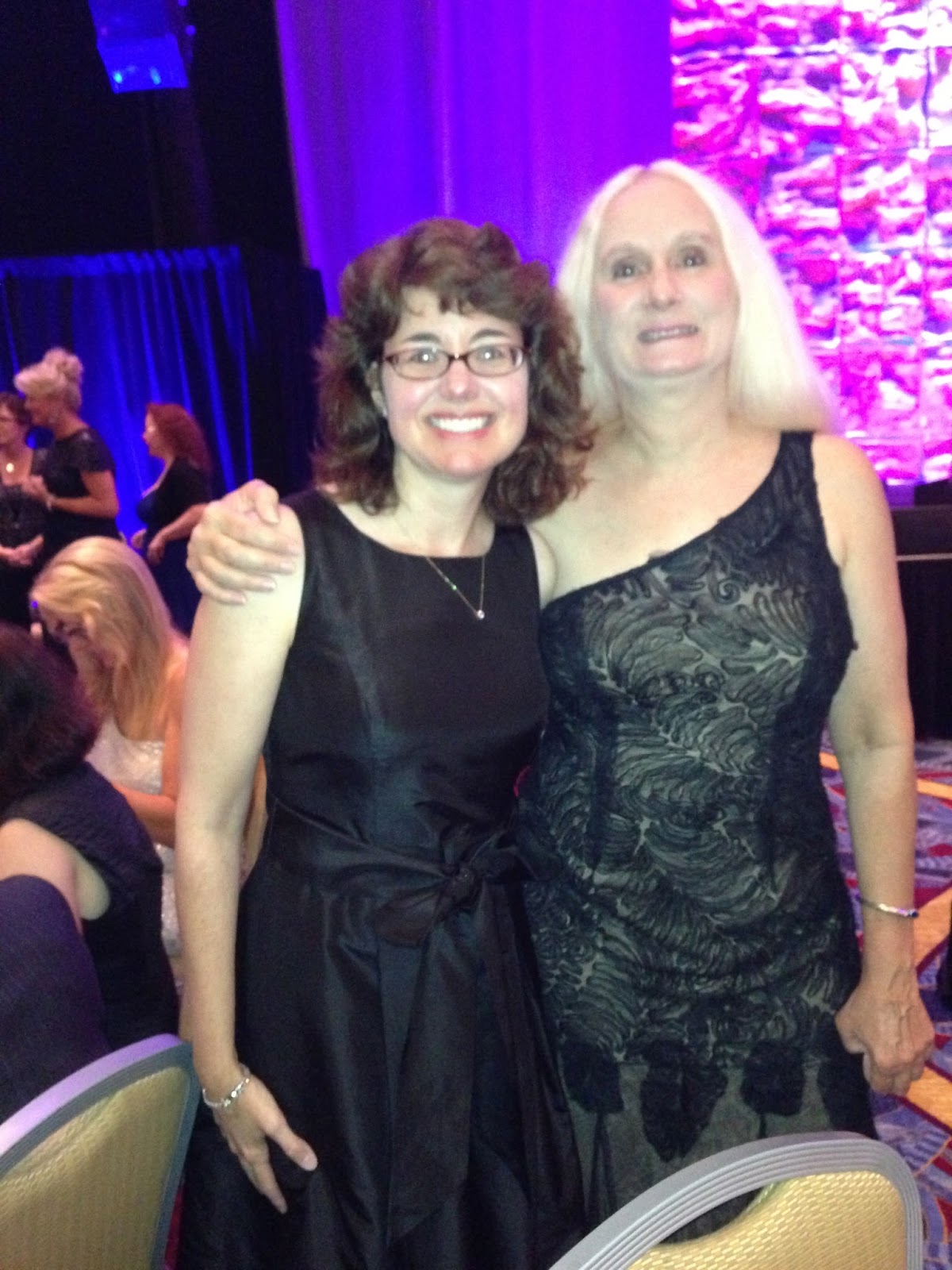
Friday, October 4, 2013

Writers: So Maybe Hearing Voices Isn't That Crazy After All

One confused little violet who thinks it's May instead of October.


I had this crazy idea to ask everyone, well, my writer friends anyway, why they write. I don't know why, maybe (make that probably) to understand why I write. If you really stop and think about it, we spend months writing a story, living with the characters we create talking in our heads, waking us up at night and forcing us to write their words on sticky notes before we forget them.

Does this sound familiar?

More importantly, is this normal?

The mission of understanding why we (I) write with regard to our (my) mission in life is a really big topic that can't be tackled all at once, but I read something recently that helped me understand something really intrinsic about myself...like, maybe I'm not so crazy after all.

The great writer and activist George Orwell (1903-1950), whom we all know from his classic novels Nineteen Eighty-Four and Animal Farm, wrote an essay in 1946 called Why I Write. Here's one of many parts that caught my eye (It's a little long but I've bolded what I thought was fascinating):

"But side by side with all this [writing activities he describes], I was carrying out a literary exercise of a quite different kind:  this was the making up of a continuous 'story' about myself, a sort of diary existing only in the mind. I believe this is a common habit of children and adolescents. As a very small child I used to imagine that I was, say, Robin Hood and picture myself as the hero of thrilling adventures, but quite soon my 'story' ceased to be narcissistic in a crude way and became more and more a mere description of what I was doing and the things I saw. For minutes at a time this kind of thing would be running through my head:  'He pushed the door open and entered the room. A yellow beam of sunlight, filtering through the muslin curtains, slanted onto the table, where a match-box, half-open, lay beside the inkpot. With his right hand in his pocket he moved across tot he window. Down in the street a tortoiseshell cat was chasing a dead leaf', etc. This habit continued until I was about twenty-five, right through my non-literary years. Although I had to search, and did search, for the right words, I seemed to be making this descriptive effort almost against my will, under a kind of compulsion from outside. The 'story' must, I suppose, have reflected the styles of the various writers I admired at different ages, but so far as I remember it always had the same meticulous descriptive quality."


This just bowled me over. The description of an inner narrative that reads like a book...does anybody else's brain do this? Well, mind does and that is scary, but to have it described, well...it's very validating! Like, it might just be almost normal to hear voices in your head (if you're a writer, anyway).

So do you hear voices in your head? Have you for a long time? Do you know why you write? Do you see yourself in this passage? Feel free to share. (I'm going to share the thoughts I've been collecting next week.)


Everyone stopped to take pics of this fabulous rainbow yesterday.


No impatiens in Ohio this year--they all got killed by a fungus last year. But somehow found this one single flower in my garden!


Friday, September 6, 2013

Crawling Inside Your Characters' Heads: from Robert McKee's Story


Hi Everyone!

The kids are back in school and my house is SILENT...except for the soft snores of my pooch who is passed out on her back with her legs up in the air.

I'm reading the classic screenwriting book Story by Robert McKee and I wanted to share one little tidbit    that may help you to crawl into your characters' heads and extract the perfect essence of truth and honesty that we strive every day to find to make our characters come alive.

 As writers, we seek to put truth on the page. Meaning we want our characters to act honestly, in ways that only they can act. We don't want to create cliche. We don't want to moralize. We don't want to write over-the-top unbelievable characters.

So how do you write an honest, breathing character that makes your reader laugh, cry, and get moody and unhappy when they are unhappy?

The answer is partially--do they make YOU laugh, cry, and feel miserable (and I'm not talking about just when the writing's going badly!)

Have you done that--gotten nervous, laughed, cried, started sweating, gotten pains in your stomach when you are writing a scene? Or even long after you're done writing a scene?

Well, if you haven't, maybe Robert McKee can help you out.

McKee says that we must write from the inside out--meaning that in each scene, we must not be impartial observers of our characters but actually crawl into their heads and experience the scene from their point of view.

How to do this?


Flowers that finally recovered from the torrential rains this summer and are blooming like crazy now!


Well, here's how he says NOT to do this:

--Don't ask, "How should my character take this action?"--that leads to moralizing.

--Don't ask, "How might someone do this?"--that leads to writing cute and clever but dishonestly.

--Don't ask, "If my character were in these circumstances, what would she do?"--that puts you at a distance from the character's emotions, makes you guess at them, and leads to cliche

--Don't ask, "If I were there, what would I do?"--guess what, no one cares what you would do. They care about your character (or that's the point--you want them to!)


So what should you ask? McKee says "If I were this character in these circumstances what would I do?
(italics mine)

And here's his grand explanation:

“Writers are improvisationalists who perform sitting at their word processors, pacing their rooms, acting all their characters:  man, woman, child, monster. We act in our imaginations until honest, character-specific emotions flow in our blood. When a scene is emotionally meaningful to us, we can trust that it’ll be meaningful to the audience. By creating work that moves us, we move them."


From Story:  Substance, Structure, Style, and the Principles of Screenwriting by Robert McKee, Regan Books, 1998, pages 153-154


Friday, August 16, 2013

Want to Make a Scene? Join me as I blog at Romance U Today!

Join me at Romance U. today as I virtual-lecture about jam-packing your scenes with good stuff to make them work as hard as they possibly can. Here's the link:

http://romanceuniversity.org/2013/08/16/scene-structure-with-miranda-liasson/comment-page-1/#comment-38463

See you all over there! And hey--it's Friday! Stop by and say hey! Woo hoo!!!

The Lowcountry in late afternoon. That little speck between the trees is one of my kids on a paddle board!

Tuesday, July 23, 2013

RWA Conference Highlights: A Tale Told in Pictures by Miranda Liasson


This is a story told best in pictures.


Our table at the RITA/GH ceremony included my friends and chapter mates GH Paranormal winner AE Jones and Barb Heintz.


My manuscript that won the Golden Heart in the Contemporary Series category.


AE Jones won the Golden Heart for Paranormal! We are amazed!


We got to pose for a pic with our table mates Sarah MacLean and Eloisa James, who won RITA's.  Unreal!


Gail Hart, my agent sister, who was a GH finalist in Contemporary Series. 


My chaptermates from Northeast Ohio RWA. Cleveland Rocks Romance!


Me after the ceremony with GH finalists Nan Dixon,  Paranormal GH winner AE Jones, and GH finalist Gail Hart.


Tired but happy friends Barb Heintz, me, Dyanne Conner, and Diane Rippin.


GH Winner AE Jones on the jumbotron.


Distinguished Chaptermate Donna MacMeans receiving her RWA Service Award.

Nora Roberts spoke at The Golden Network retreat. Totally awesome.


The Great Susan Elizabeth Phillips graciously took a pic with me. Clearly we both have extraordinary taste in color.


Still tired and still happy!


Fish at the Atlanta Aquarium.


Downtown Atlanta at dusk.


We may be back in reality but we made all these great memories. Thanks, Friends. The End.

Love, Miranda

Friday, June 7, 2013

Advice from Eloisa James: Throw Your Heart into It

I had the great (and a little bit scary) honor of introducing Eloisa James yesterday at a library in Cleveland. How did that come about?! You might say it was accidental networking. One of the many perks of being active in your own RWA chapter!

Anyway, Eloisa was on tour promoting her new book Once Upon a Tower, one of her reimagined fairy tale books that she described as a cross between Romeo and Juliet and Rapunzel. It sounds fabulous!

She said something in her chat last night that really stuck with me as a writer struggling to become an author. Here is is (below the pic of me and my NEORWA friends with Eloisa last night):


Northeast Ohio RWA (NEORWA) friends and me (second from left) with NYT Bestselling author
 Eloisa James.


Someone asked her how she does it all--she is a tenured Shakespeare professor, the NYT Bestselling author many times over of historical romances, as well as a wife and mom. Part of her answer was this:  I learned from watching how men did it. 

What does that mean exactly? She described how in graduate school, the women in her program would worry over their papers, constantly revising, perfecting, getting them just right. The men...just did the work and got it turned in. And they succeeded academically and promotion-wise by keeping the quantity of work in mind as well as the quality. Women seemed to strive for perfection, being afraid to turn it in until it was perfect.

She also said this very interesting quote about the many different tasks and chores that make up a woman's life:  "Whatever you're doing, throw your heart into it." She said she often knows she is writing crap but she just keeps going--she can fix it but she has the sense of moving ahead. The story gets told and the job gets done. Moral:  Quit striving for absolute perfection.

This resonates deeply with me. It showcases the differences between my husband and me. I don't know if it's a gender difference but it is true in my house. But it's great advice--Whatever you're doing, throw your heart into it, get your story told, get your work done. Only finished books get published!


Mountain in West Virginia (my photo).


Wednesday, May 22, 2013

Reinventing Yourself as a Writer


This is a prequel blog.  (Sort of like how a novella comes out before a novel.)

I've been invited to be on the Ruby Slippered Sisterhood blog (www.rubyslipperedsisterhood.com)
 on Thursday, May 23rd, as one of their series of Golden Heart finalists. I'll be talking about...me. Specifically, what I did when I hit a brick wall in my writing that helped me up to the next level. (The next level being two Golden Heart finals this year—but I’m not published yet.)

So on a related topic, today I'm going to talk about some advice on reinvention that I got from some seasoned writers this past weekend at my chapter conference.

I think everyone hits their own brick wall—more likely multiple ones at different times in our careers.

Every writer, from novice to seasoned professional, has to continually re-evaluate their writing on multiple fronts—before you publish, it’s what is my true voice? What are my strengths? What kind of story should I be telling? 

And during a career, it sounds like the same questions must be asked as well.

This weekend, I heard a panel of three longstanding authors who discussed keeping your career afloat in rough waters.

The panel was comprised of Duffy Brown, LuAnn McLane, and Donna MacMeans.

They all said—write a story you’re passionate about.

Find you strengths. If you don’t know, ask your friends. They will know.

Reinvention involves working with your strengths, finding an angle that is unique but fully yours.

Be brave.

Keep writing.

You have to love writing THAT MUCH—if you can think of one reason you shouldn’t do it, maybe you shouldn’t.

You have to write something you are enthusiastic about, that you believe in with all your heart. Fake enthusiasm shows. Real enthusiasm sells books. Your writing has to touch your own heart and your own emotions.

Learning discipline now gets you through the hard times later. Writers that survive keep producing.

LuAnn McLane ended the panel with this advice for us when we question our choices or when we have tough decisions to make about our careers:  Always remember how much you love reading. Reading brings joy to people through tough times by making them laugh, cry, and feel many different emotions.

We were readers before we were writers. Who among us doesn't love to read! And I think that's a good thing to remember when we face the brick wall.

FreeFoto.com, Image 12-64-7


Friday, April 19, 2013

Creativity and Productivity

I read something this week that has been churning in my mind ever since. It's a fabulous blog post on creativity done by Margarita Tartakovsky and you can view the entire post here:


The entire thing is fascinating, but the part that really stuck with me all week was the story about the pottery class. Basically, students who had to produce quantity of pottery produced more creative--i.e., higher quality--pieces than students who were permitted to take an entire semester to create a single piece (i.e., those who strove for quality, not quantity). 

Tartakovsky's advice is to stop striving for perfection in creative work, but instead to focus on a "magic threshold" where you're happy enough with it but you're able to let it go and, in the words of artist Jolie Guillebeau, who taught herself to paint faster, "hope that the quantity of my work will also improve the quality."

This is a fascinating concept, and one which skilled, bestselling writers surely must learn. Could it be that the more you produce, the more creative you become and the better you get at being creative?

It reminds me of something I read--I don't remember where--basically, this writer said that not everything you produce is going to be great. But the MORE you produce, the BETTER CHANCE you've got at putting forth something great. 

So are speed and perfectionism mutually exclusive? 

Well, I think they can co-exist, if the perfectionism is toned down. How to do this? (I don't know, but I am working on it. )

This article also addresses the fear the creative ideas are finite. I remember reading something from a bestselling author saying she felt she had more ideas than she could possibly write about in a lifetime. I am on the opposite spectrum. I fear not having ideas. But filling the creative well is a skill that can be cultivated, and it starts with showing up every day to work. And work hard.

More great advice:  Focus on process, not outcome. Focusing on outcome stifles the process, says creativity coach and writer Miranda Hersey. Worrying about if your work sucks, if you'll be able to get it all together and have it make sense, and what will happen in your career are creativity killers.

When this happens, I think about why I sit in front of the computer day after day. The answer is--because I wouldn't want to be anywhere else! I'm so grateful to be here! Things are a little different than when I was 12 and writing Star Trek fan fiction to my heart's content. The muse is a little older and more scarred, and the devil-may-care attitude has been pulled back and restrained. But the joy is still there.

I think this article reinforces the fact that the skills it takes to write fiction, including the creative skills, are trainable with lots of work and the determination to show up day after day to do your job. Like any other job, practice makes perfect--or at least better.

How do you teach yourself to write faster or tone down your inner perfectionist?


Beautiful brickwork on a Savannah sidewalk outside of Colonial Park Cemetery (my photo).


Sidewalk of seashells in Savannah--I think they call this tabby, a concrete made of lime, sand, and oyster shells (my photo).
.